
Hartford City Sex Offender Checks
The Connecticut Sex Offender Registry is the main Hartford lookup channel. Connecticut State Police, not a Hartford sheriff or county office, maintains it. A person checking a known name can start with first and last name. A neighborhood search works better through the town, ZIP, or address-map controls. Ordinary public searches are free and do not require the searcher to identify themselves.
Use more than one control when a name is common. Compare the photo, physical description, date-of-birth or age display, aliases, offense information, and last update before treating a result as the intended person. For an address near Hartford's edge, also search the adjacent town or use the map. The federal National Sex Offender Public Website adds a cross-state layer when a person may have moved or when a location spans several jurisdictions.
Map Hartford Registry Addresses
The registry offers several geographic paths. A Hartford town search finds public entries assigned to the municipality. ZIP searches can cross municipal assumptions, while the address route centers the map on a street location and uses a portal-defined radius. Map and list views answer different questions. The map shows spatial context; the list makes names and result summaries easier to scan.
Connecticut State Police's registry upgrade description illustrates the search and notification system.
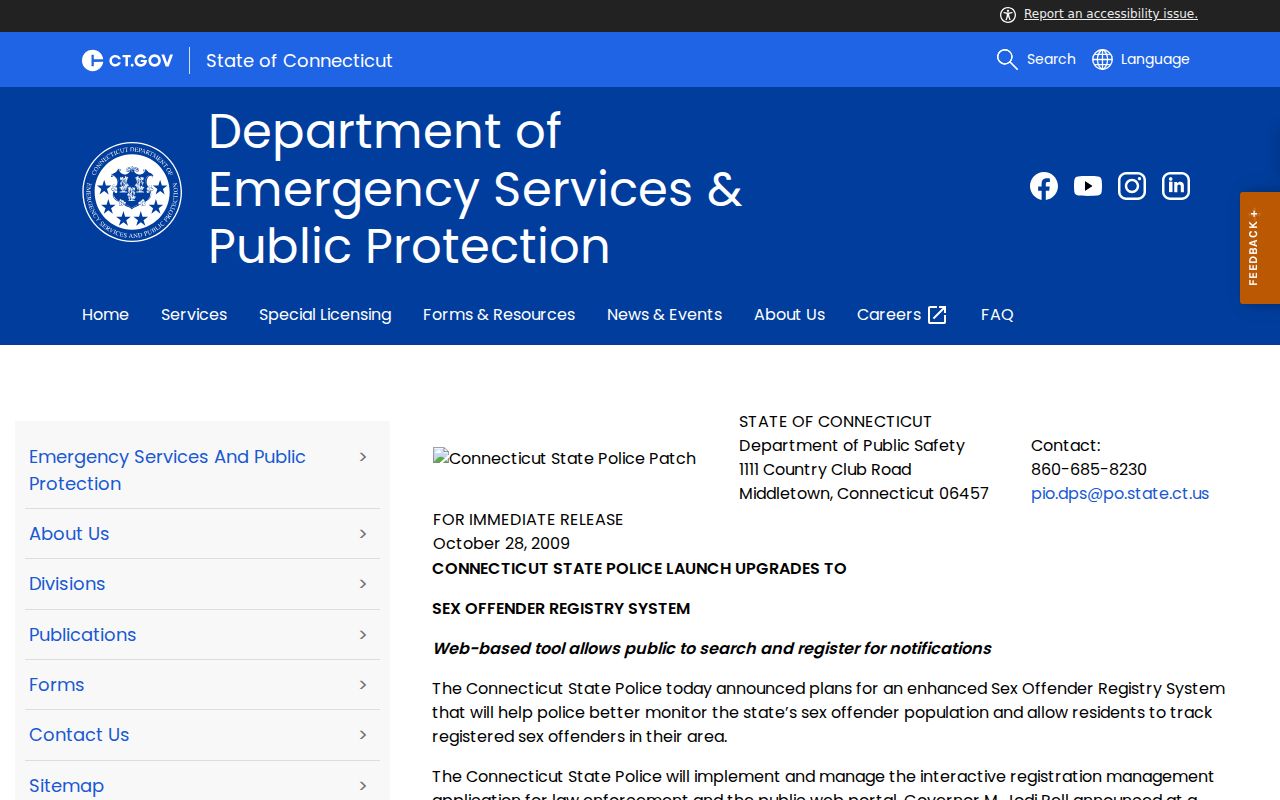
The official screen reinforces that map search and alerts belong to the same state-maintained public-safety service. A pin identifies a reported registry address. It does not show who else lives there, predict conduct, or establish that a new crime occurred.
Connecticut Sex Offender Registry Searches
Choose the search route that matches the question. Name fields work for a known person. Town and ZIP controls help with Hartford-wide awareness. Address and radius controls focus on a home, school route, park area, or other place important to a family's safety plan.
- Open the official Connecticut registry and review its conditions of use.
- Enter a name, select Hartford, use a ZIP code, or supply an address for the map route.
- Run the search and compare enough profile fields to avoid a mistaken identity.
- Open the public profile and check status, address, offense, and last-update information.
- Search nearby towns or NSOPW when the location or person's history may cross a boundary.
| Field or Control | Type | Required | Use |
|---|---|---|---|
| Last and first name | Text | Optional | Specific-person search; the first name narrows results. |
| City or town | Dropdown/text | Optional | Select Hartford for a municipal search. |
| ZIP code | Text | Optional | Search a five-digit area. |
| Address | Text | Map route | Centers the geographic search. |
| Radius | Dropdown | Optional | Uses the distances currently offered by the portal. |
| Map/List view | Control | No | Switches between geographic and list results. |
| Email alerts | Registration link | No | Sets notice for a chosen address and area. |
Set Hartford Registry Alerts
The confidential email-notification feature lets a user designate an address and area rather than repeat the same manual search. Connecticut's launch materials state that a notice is sent within 24 hours after a qualifying address change reaches the state system. That timing begins when the registry receives the change, not necessarily when a move occurs.
Alerts are best treated as one safety signal. Keep the selected location current, read the linked profile, and verify its status and update fields. A notification says registry information now places a person within the chosen area. It does not report a new arrest, confirm wrongdoing at that address, or replace emergency services.
Note: Registry alerts track qualifying updates in the state system; they do not certify real-time physical presence at a mapped address.
Registry Profiles: What They Show
A public profile combines identification, location, registration, and qualifying-offense fields. Read them together. A photograph and physical description can help separate similar names, while aliases can explain why an expected spelling did not appear in the first search. Status, verification, and update fields help show how current the entry is.
| Name and aliases | Public name forms linked to the registration record. |
|---|---|
| Photo and description | Photograph, age or birth information, sex, race, height, weight, hair, eyes, and identifying marks where public. |
| Registered address | Residential map location and secondary or temporary address when authorized for public display. |
| Offense information | Description, statute, conviction or adjudication date, jurisdiction, and authorized victim category fields. |
| Registration term | Start and end information or lifetime status as applicable. |
| Status and update | Compliance state, verification data, vehicles, or employer/school information where Connecticut law makes it public. |
Hartford Registry Is Not Arrest Data
A registry entry documents a statutory duty tied to a qualifying conviction, adjudication, or court finding. It is not Hartford's current arrest log. The address can change without a new criminal case, and an old qualifying offense can support an active registration requirement. Conversely, a recent arrest does not appear merely because the allegation has a sexual component.
For a new Hartford prosecution, use the state court docket and the appropriate police record. For registry status, use the official registry. Keeping those sources separate prevents a common error: reading a compliance update as a new charge or reading the absence of a new arrest as proof that registration duties ended. Hartford arrest and booking channels are covered separately in the Hartford Arrest Search.
Registration Levels and Duties in Connecticut
Connecticut does not fit a simple public Tier I, Tier II, and Tier III chart. Duties turn on the offense, conviction date, statutory category, and some court findings. Common public terms are ten years and lifetime, while some covered registrants verify every 90 days. The governing provisions in CGS Chapter 969, especially sections 54-250 through 54-261, control over a generic federal-tier label.
| Connecticut Category | Duration | Verification and Visibility |
|---|---|---|
| Statutorily designated ten-year registrant | Ten-year statutory period | Subject to the applicable exclusions, extensions, and verification rules. |
| Sexually violent or lifetime category | Lifetime under the governing provision | Periodic verification applies; some covered people verify every 90 days. |
| Court-ordered or public-safety category | Depends on judgment and statute | Disclosure and duties follow the governing subsection and court finding. |
| Nonpublic or restricted information | As law requires | Law enforcement may retain data not shown in an ordinary public profile. |
Classification should be read from the actual profile and current statute. Do not infer a duty from offense wording alone.
Hartford Registry Versus NSOPW
The Connecticut registry offers the deepest state-specific view for Hartford, including its local town filter, map, and alert tools. NSOPW searches participating public registries across jurisdictions. The national layer is useful when a person has lived elsewhere, when a trip crosses state lines, or when Hartford's municipal boundary makes a single-town query too narrow.
The official NSOPW search provides that broader reach.
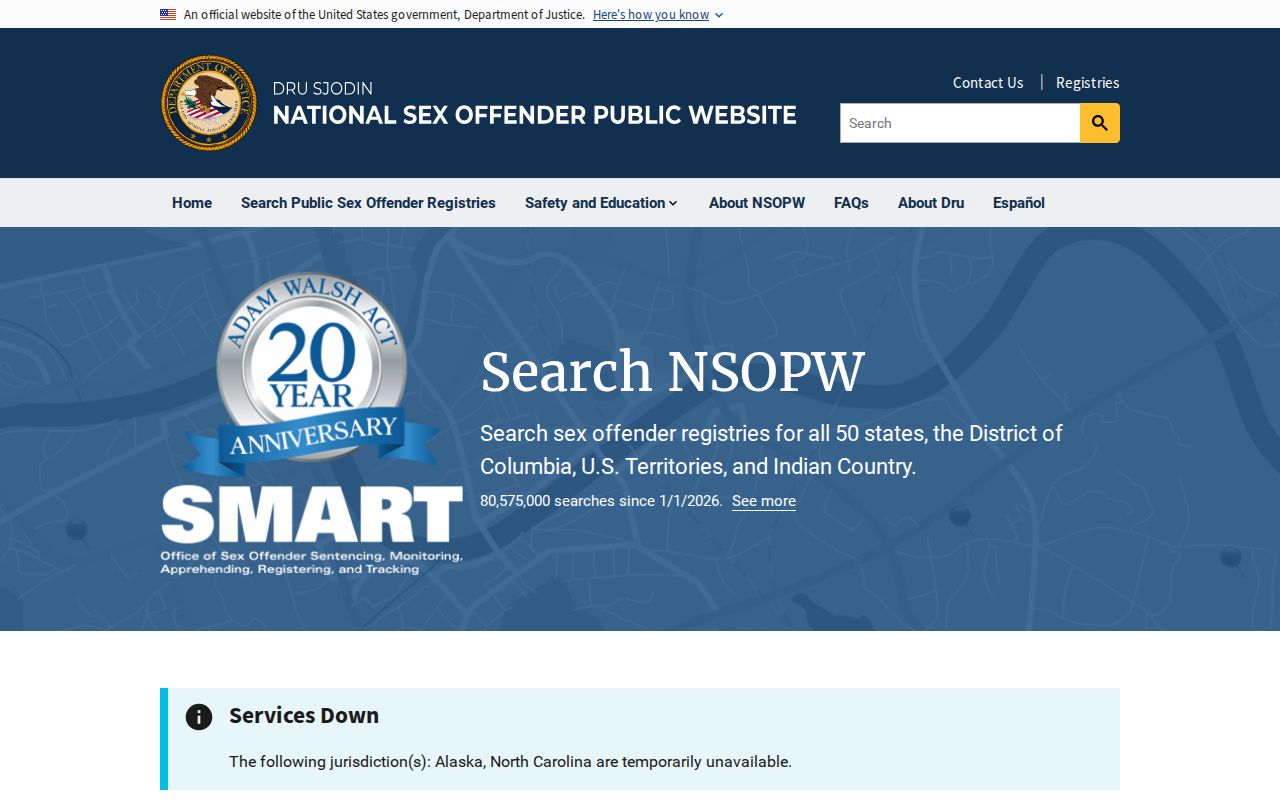
The national search supplements Connecticut's system rather than replacing it. Return to the Connecticut profile for state-specific status and registration details, and compare update dates if results appear to differ.
Report Hartford Compliance Concerns
Suspected noncompliance should go to law enforcement. Hartford Police can receive information about a person registered in Hartford, while the Connecticut State Police Sex Offender Registry Unit maintains the central system. The state unit is listed at 1111 Country Club Road, Middletown, CT 06457, telephone 860-685-8060.
Describe the concern without confronting the registrant. Note the public profile, address or status field at issue, and when the discrepancy was observed. A wrong-looking map pin may reflect geocoding, a recent change still moving through the system, or an actual reporting problem. The agency can assess which explanation applies.
Connecticut's registry disclosure law provides the legal frame for public access.
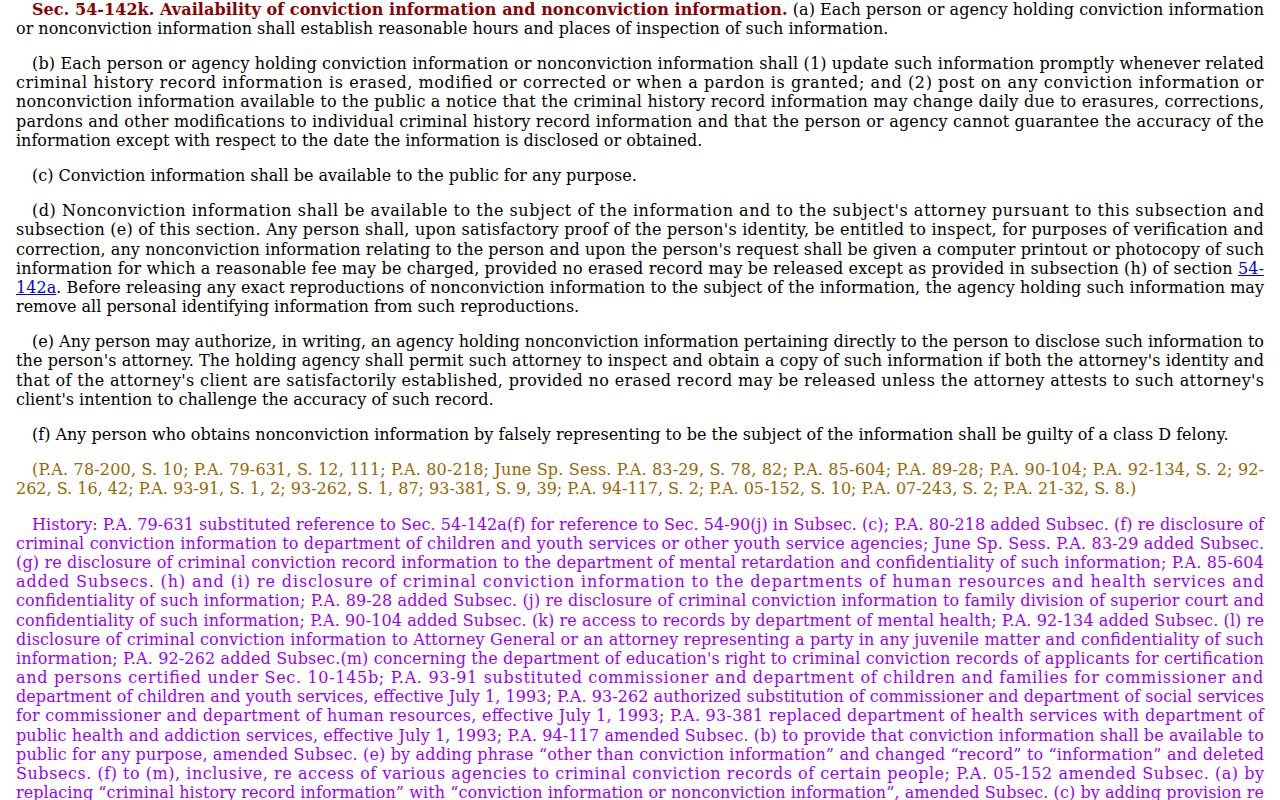
The statute view helps explain why a public profile is a defined disclosure product, not a complete police or court file.
Using Registry Information Lawfully
Registry access supports informed personal, family, and neighborhood safety choices. It can help a household set an address alert, understand a listed registration status, or identify the proper agency for a suspected compliance issue. It cannot justify threats, harassment, vigilantism, or harm. Never approach a listed person to investigate a discrepancy.
Read only what the profile establishes. A mapped address does not imply that every resident is registered. A qualifying past offense does not establish a new offense. When immediate danger exists, call emergency services; when the concern is a registry duty, report it through Hartford Police or the State Police unit.
Misuse is a crime: Connecticut warns that registry information may not be used to injure, harass, or commit a criminal act against a registrant or another person. Misuse can lead to prosecution under the registry's governing law.